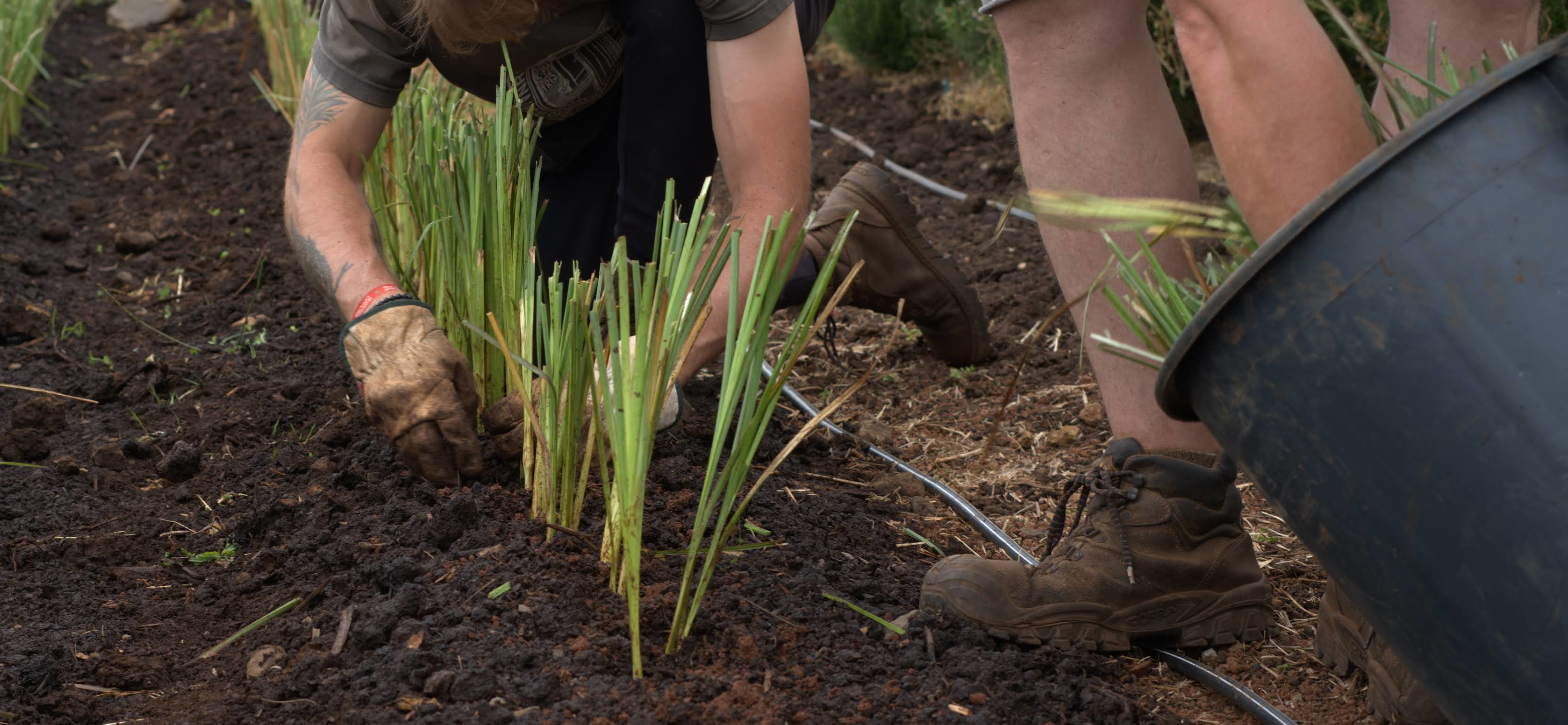
Vetiver Grass (Chrysopogon zizanioides) is not merely a plant; it is a bio-engineering solution. For the best results in erosion control, windbreak, or bio-remediation, installation must follow precise technical standards. Whether you are stabilizing a steep mountain slope in Madeira or creating a sustainable biomass hedge, follow this guide to ensure your installation meets structural and functional requirements.
Vetiver is renowned for its extreme adaptability, making it the ideal choice for degraded or difficult sites.
To achieve effective structural erosion control, spacing is defined by the Vertical Interval (VI)—the vertical height difference between one row of Vetiver and the next.
| Slope Grade | Distance Between Rows (VI) | Purpose |
| Gentle (0-10%) | 2.0 - 3.0 meters | Soil moisture retention / Mulch |
| Moderate (10-30%) | 1.0 - 1.5 meters | Erosion control / Contour barriers |
| Steep (30-60%) | 0.5 - 1.0 meters | Structural slope stabilization |
| Extreme (>60%) | 0.5 meters | Critical stabilization / Retaining |
For privacy hedges and windbreaks, space slips 15cm to 20cm apart in a single or staggered double row to create a dense, impenetrable barrier.
Plant along the contour lines as specified in the table above. The goal is to create a "living barrier" that traps sediment and reduces runoff velocity. On extreme slopes, ensure the planting hole is deep enough to anchor the crown securely.
For cleaning groundwater or soil contaminated with heavy metals or farm chemicals, plant Vetiver in rows at the base of slopes or at the drainage exit points of your farm. The deep, massive root system acts as a biological filter, stripping contaminants from the water as it passes through the root zone.
Vetiver is a "biomass factory." To harvest mulch without compromising the hedge’s erosion control function:
For maximum density, use a staggered double-row configuration (triangular pattern). This creates an immediate visual and wind-filtering barrier, ideal for protecting sensitive nursery areas or providing privacy.
Once established, Vetiver is virtually maintenance-free. However, the first 6–12 months are the "establishment phase."
Precision in planting is the key to ensuring your project remains stable for decades. Our team specializes in supplying high-quality, certified organic Vetiver for industrial-scale applications.
Need a precise count for your project?
Use our Vetiver Terrace or Slope Calculator to determine your exact slip requirements based on your site's linear meters and slope angle.
