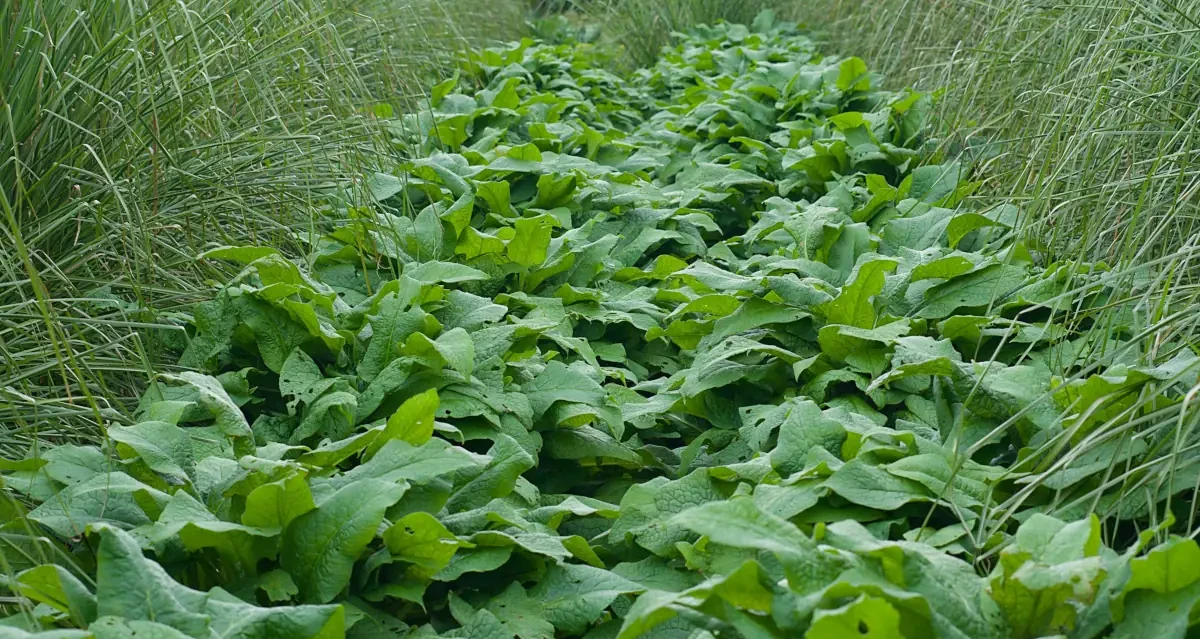
For commercial growers, profitability is a constant battle against rising input costs, labor shortages, weeds, and pests. While often viewed strictly as a tool for hillside civil engineering, Vetiver Grass (Chrysopogon zizanioides) is one of the most powerful, research-validated yield multipliers available for diversified farming.
When implemented correctly as an integrated agricultural management system, Vetiver directly lowers operating expenses, suppresses weeds, disrupts pest life cycles, and builds the soil infrastructure required for high-yield farming.
Below is a comprehensive breakdown of how Vetiver optimizes production across major crop and livestock sectors.
1. Open-Field & Greenhouse Vegetables
Vegetable production demands intense nutrient inputs, strict water management, and heavy labor for weed control. Vetiver significantly improves the bottom line for market gardeners.
- Weed Suppression & Labor Reduction: Planting continuous Vetiver rows along the borders of vegetable plots or between high-value rows acts as a living root-barrier. It actively blocks invasive running grasses and weeds from encroaching into crop beds, dramatically reducing manual weeding labor.
- The Ultimate Biomass Factory: Vetiver leaves can be cut up to 4 times a year, yielding massive quantities of carbon-rich, pristine mulch. Applying this mulch to vegetable beds suppresses weed germination, dramatically slashes irrigation frequency by retaining soil moisture, and prevents soil-borne diseases from splashing onto crop foliage.
- Nutrient Banking: Vetiver’s deep roots intercept leaching fertilizers that escape shallow vegetable root zones, locking them into its biomass. When you chop and drop the leaves as mulch, those nutrients are recycled directly back into your topsoil.
2. Banana & Subtropical Fruit Plantations
Banana plants and fruit orchards are highly vulnerable to high winds, nutrient leaching, and soil moisture stress.
- Windbreak & Microclimate Creation: A mature Vetiver hedge grows up to 3 meters tall. Planted as a perimeter or staggered windbreak, it protects banana leaves from shredding and prevents fruit drop in young orchards. It also lowers ambient wind-evaporation, keeping the plantation humid and hydrated.
- Root-Zone Structural Integrity: Banana plants have shallow, heavy root systems easily destabilized by heavy fruit loads or torrential rain. Inter-row Vetiver hedges anchor the surrounding soil matrix, preventing plant toppling on sloped orchards.
- Stem Borer & Nematode Disruption: Studies show that the dense biological perimeter of Vetiver disrupts the movement of soil nematodes and deters crawling orchard pests from reaching the main crop stems.
3. Sugarcane Production
Sugarcane farming faces extreme soil loss, high weed pressure during establishment, and devastating losses from stem borers.
- The "Push-Pull" Pest Strategy: Vetiver is a highly effective, natural trap crop for the sugarcane stem borer (Chilo sacchariphagus). The moths are highly attracted to Vetiver and lay their eggs on its leaves. However, because Vetiver leaves are hairy and highly fibrous, the hatched larvae cannot successfully feed or penetrate the stem, resulting in nearly 90% larval mortality. This protects the primary sugarcane crop without chemical pesticides.
- Runoff & Sediment Capture: In rain-fed sugarcane systems, standard harvesting leaves the soil bare and exposed. Vetiver hedges planted at intervals capture topsoil runoff, keeping fertilizer on the field where it belongs.
4. Livestock, Cattle & Pasture Management
For livestock and dairy operations, Vetiver solves critical challenges regarding forage security, waste management, and animal comfort.
- Drought-Resilient Emergency Forage: While old Vetiver grass is too fibrous for feed, young Vetiver leaves (cut at 4–6 weeks old) have a nutritional profile similar to medium-quality pasture grass. During extreme summer droughts when standard pastures dry up, Vetiver's 3-meter deep roots keep it green and growing, providing a reliable emergency fodder reserve for cattle, sheep, and goats.
- Effluent & Manure Bio-Remediation: Livestock operations generate high volumes of nutrient-heavy runoff. Planting Vetiver downstream from cattle sheds or wash facilities allows its massive root system to filter and absorb excessive nitrogen and phosphorus, cleaning the wastewater and transforming toxic runoff into useful, harvestable biomass.
- Living Boundaries & Shade: Staggered double-rows form impenetrable living fences that assist in rotational grazing management while acting as thermal windbreaks for livestock.
5. Vineyards & Viticulture
Vineyards planted on slopes face aggressive soil erosion, nutrient migration, and the high cost of mechanical terracing.
- Terrace Stabilization: Vetiver eliminates the need for expensive stone or concrete retaining walls in viticulture. Planted on the lip of vineyard terraces, it secures the soil, prevents terrace collapse during heavy rainfall events, and ensures tractor paths remain stable and safe.
- Water Infiltration: The thick vegetative barriers slow down torrential downpours, forcing the water to sink deeply into the vine root zones rather than washing over the surface.
Technical Specifications for Agricultural Layouts
To maximize your return on investment, ensure your bulk planting follows these target parameters:
- For Weed Suppression & Living Fences: Space slips tightly at 10–15 cm intervals within a single row. This ensures the crowns grow together quickly to form an unbroken biological wall.
- For Pest Control (Trap Cropping): Plant a single contour hedge of Vetiver around the entire perimeter of your cash crop (vegetables or sugarcane) to act as an outer defensive shield.
- Soil & pH Profile: Vetiver thrives across an extreme pH spectrum (3.3 to 12.5) and handles poor, degraded, or compacted agricultural soils with ease.
Scale Your Yields with GroVerdi
At GroVerdi, we propagate certified organic Vetiver slips explicitly conditioned for agricultural resilience. Whether you are looking to secure an orchard, eliminate manual weeding labor, or protect your crop from pests organically, our team provides the bulk volume and technical design specifications required for your farm's success.
[Calculate Your Field Requirements & Request a Bulk Agricultural Quote]
Scientific Literature & Studies Used
- Pest Prevention (Sugarcane/Maize Stem Borer):
- Van den Berg, J., et al. "Vetiver Grass as a Component of Integrated Pest Management Systems." Crop Protection, Vol. 22. Documents Vetiver's role as a highly effective "dead-end" trap crop for stem borers due to high larval mortality rates.
- Weed Suppression & Mulch Efficiency:
- National Research Council. "Vetiver Grass: A Thin Green Line Against Erosion." National Academies Press. Details the biomass production capabilities of Vetiver and its high efficiency in weed suppression and moisture conservation when utilized as a surface mulch.
- Nutrient Recycling & Vegetable Production:
- Truong, P., & Danh, L. T. "The Vetiver System for Environmental Protection and Land Stabilization." Technical Bulletin, Pacific Rim Vetiver Network. Validates Vetiver's ability to intercept escaping agricultural fertilizers (N and P) and recycle them via biomass pruning.
- Cattle Forage Quality:
- Vietmeyer, N. "Vetiver Grass: Its Potential for Forage and Livestock Feeding." International Vetiver Network (TVN). Analyzes the crude protein and digestibility values of young Vetiver prunings (4-6 weeks) as a sustainable ruminant feed source during seasonal drought periods.